
You’ve probably seen those smile makeover stories on social media – the ones where someone goes from hiding their teeth to beaming with confidence. But here’s what most people don’t realize: behind many of those transformations is a dental specialist you might never have heard of. We’re talking about prosthodontists, the experts who’ve dedicated years of extra training to master the art and science of restoring smiles.
If you’re dealing with missing, damaged, or worn teeth, understanding what a prosthodontist does could change everything. These aren’t your typical dentists. After finishing dental school, they commit to three more years of intensive training focused exclusively on rebuilding and replacing teeth. That means when you sit in their chair, you’re getting someone who’s seen it all and knows exactly how to give you back your smile – and your confidence.
Here’s the thing: cosmetic dentistry isn’t just about looking good (though that’s definitely part of it). It’s about being able to eat your favorite foods without worry, speak clearly, and smile without that nagging self-consciousness. And prosthodontists? They’re the ones who make it happen through crowns, bridges, dentures, and other advanced solutions. Let’s jump into what they actually do and how they might be exactly what you need.
What Is a Prosthodontist?
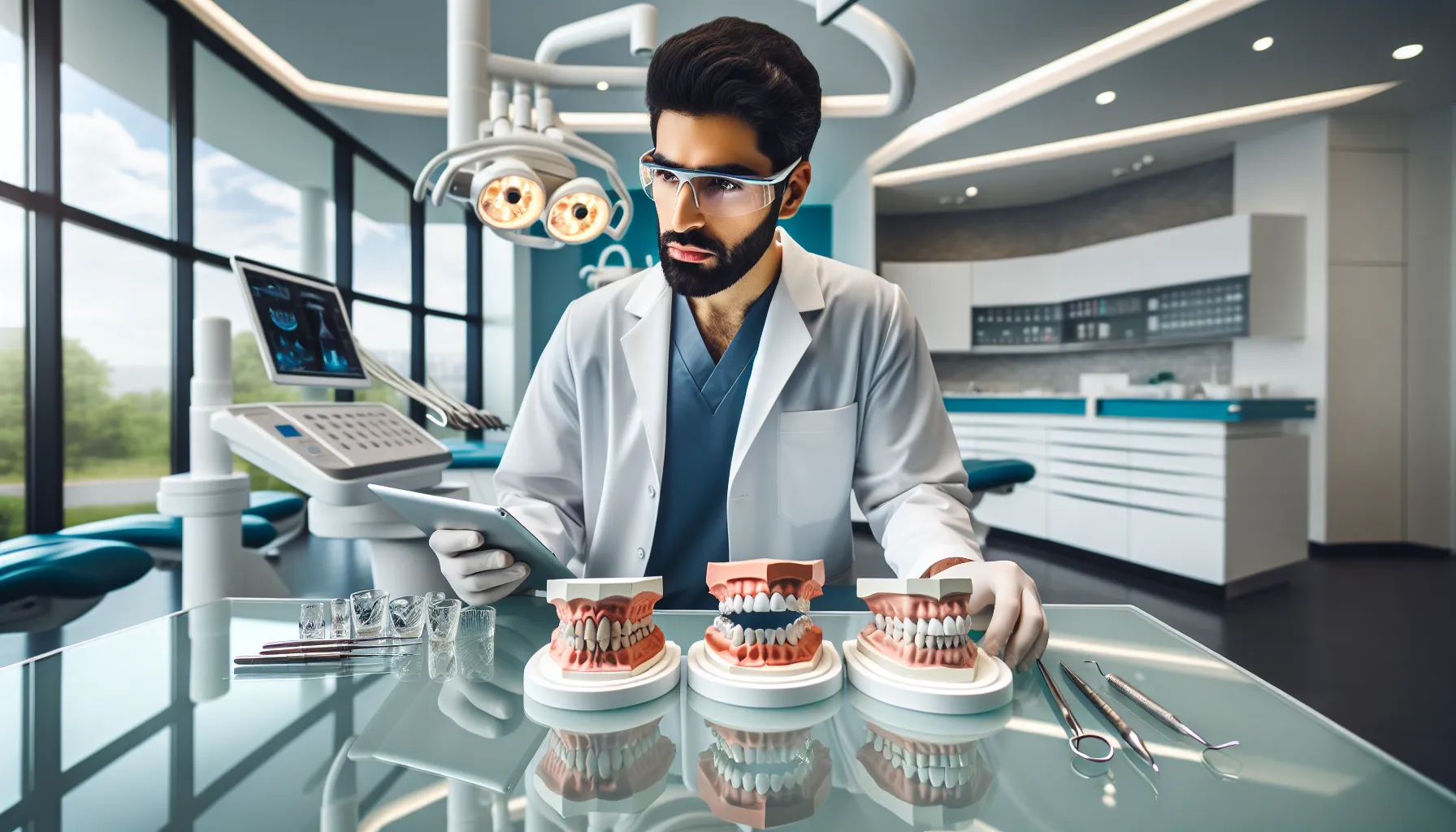
Think of a prosthodontist as the architect of dental restoration. While general dentists handle your regular cleanings and basic procedures, prosthodontists are the specialists you turn to when things get complicated.
After dental school, these professionals spend three additional years in specialized residency programs. That’s three full years focusing on nothing but restorative dentistry – dental implants, crowns, bridges, dentures, aesthetics, and how your teeth fit together when you bite down. We’re not exaggerating when we say they become masters at what they do.
What sets prosthodontists apart is their expertise in diagnosis and treatment planning, especially for complex cases. Got multiple missing teeth? Severe wear from grinding? A bite that’s never felt quite right? These are the scenarios where prosthodontists shine. They don’t just fix one tooth at a time – they look at your entire oral system and figure out how to restore it properly.
We often work with patients who’ve been referred by their general dentists for cases that require specialized knowledge. And honestly, that collaborative approach benefits everyone. Your dentist knows your history, and we bring the advanced training to handle the tricky stuff. It’s teamwork at its finest, all focused on getting you the results you deserve.
The Role of Prosthodontists in Cosmetic Dentistry

Now, let’s talk about the cosmetic side of things. Because yes, we absolutely care about how your teeth look – but never at the expense of how they function.
Prosthodontists sit at this unique intersection of form and function. We perform teeth whitening to tackle discoloration that’s bothering you. We use bonding procedures to repair those annoying chips and cracks, fill gaps between teeth, or even adjust the size of teeth that seem out of proportion. But here’s where we differ from purely cosmetic providers: we’re always thinking about the long game.
Every cosmetic decision we make considers your bite, your jaw health, and how your restoration will hold up years down the road. It’s not enough for your smile to look amazing in the mirror today if it’s going to cause problems tomorrow. That’s the prosthodontic difference.
What we love most about this work is watching patients rediscover their confidence. You know that feeling when you’ve been hiding your smile for years, and suddenly you can laugh freely at dinner without covering your mouth? That’s what keeps us coming back every day. We’re restoring more than teeth – we’re giving people back a piece of themselves they thought was gone forever.
Our expertise with dental prostheses means we can handle cases that might seem impossible at first glance. Missing multiple teeth? We’ve got solutions. Severe damage from an accident? We can rebuild. The goal is always the same: help you eat comfortably, speak clearly, and smile with genuine confidence.
Dental Crowns: Restoring Function and Beauty
Crowns are one of our most versatile tools. Think of them as protective caps that slip over damaged teeth, giving them new strength and a fresh appearance.
When you come in for a crown evaluation, we start with a thorough examination and X-rays. We’re looking at the extent of damage, the tooth’s structural integrity, and how it fits into your overall bite pattern. This isn’t a one-size-fits-all situation – every crown we recommend is based on your specific needs.
When Are Crowns Recommended?
So when do you actually need a crown? Most commonly, we recommend them for teeth damaged by decay, trauma, or disease. Maybe you had a large filling that finally gave out, or you cracked a tooth biting into something hard. Perhaps you’ve got a tooth that’s been root-canaled and needs protection. These are classic crown scenarios.
What surprises people is how much a crown can do. It doesn’t just cover up the problem – it actually restores the tooth’s function. You can bite down with confidence again. The tooth is protected from further damage. And with modern materials, it looks so natural that even you might forget which tooth has the crown.
Crowns also play a role in more complex treatments. They anchor bridges, cover dental implants, and can be part of a full mouth reconstruction. Basically, they’re workhorses in the world of restorative dentistry.
Types of Dental Crowns
Here’s where it gets interesting. We work closely with skilled dental technicians to create custom crowns that fit your mouth perfectly and match your other teeth. The materials we choose depend on several factors – where the tooth is located, how much you grind your teeth, your budget, and your aesthetic goals.
Some crowns prioritize strength, others focus on appearance, and many strike a balance between the two. What matters most is that your crown fits comfortably, functions effectively, and looks natural. We take our time getting this right because a well-made crown can last for many years – sometimes decades – with proper care.
The fabrication process involves precise measurements and multiple fittings to ensure everything lines up perfectly. Your bite needs to feel right, the crown can’t irritate your gums, and it should blend seamlessly with your smile. It’s detailed work, but that attention to detail makes all the difference in your long-term satisfaction.
Dental Bridges: Filling the Gaps
Missing a tooth or two? Bridges might be your answer. These prosthetic devices literally bridge the gap where teeth used to be, anchoring to the natural teeth on either side.
How Bridges Work
The process starts with impressions. We create detailed models of your jaws and teeth to capture the exact dimensions we need. These models go to a dental laboratory where skilled technicians fabricate your custom bridge.
Once your bridge is ready, we bring you back in for fitting. This is where our training really comes into play. The bridge needs to fit snugly, match your bite perfectly, and look natural alongside your other teeth. We make adjustments as needed – sometimes several rounds of fine-tuning – until everything feels right.
What we appreciate about bridges is how they prevent the domino effect of tooth loss. When you lose a tooth, the surrounding teeth can start to shift. Your bite changes. Jaw problems can develop. A well-designed bridge stops all that before it starts, maintaining the integrity of your dental structure.
Benefits and Considerations
Bridges restore your ability to chew effectively and speak clearly. They also maintain your face shape – something people don’t think about until they see how tooth loss can age someone’s appearance.
That said, bridges do require preparing the adjacent teeth, which is something we always discuss thoroughly. You deserve to understand exactly what the process involves and what alternatives exist. Some patients prefer dental implants instead, and we’re happy to walk through those options too.
The key is finding what works for your specific situation. Your oral health, your budget, your lifestyle – it all factors into our recommendations. We’re here to guide you, not push you toward any particular treatment. After all, you’re the one who’ll be living with the results, so we want you completely comfortable with the decision.
Dentures: Complete and Partial Solutions
Let’s be real – dentures have gotten a bad rap over the years. Maybe you’ve heard horror stories about ill-fitting plates or dentures that look obviously fake. But here’s what’s changed: modern denture technology has come a long way, and prosthodontists have the specialized training to get them right.
Types of Dentures
Dentures come in two main varieties: complete and partial. Complete dentures replace all the teeth in your upper or lower jaw (or both). Partial dentures fill in gaps when you still have some natural teeth remaining.
The design process for both types requires careful planning. We’re not just replacing teeth – we’re recreating the function and appearance of your natural smile. That means considering how you speak, how you chew, how your facial muscles work, and yes, how you want to look.
Partial dentures need to work harmoniously with your remaining natural teeth. They can’t put too much pressure on certain teeth or create bite problems. Complete dentures need to fit your gums securely while looking natural and feeling comfortable. It’s a balancing act that requires both technical skill and artistic sensibility.
Modern Denture Technology
The materials we use today are light-years ahead of what was available even ten years ago. We’re talking about dentures that fit more comfortably, look incredibly natural, and restore oral function in ways that would’ve seemed impossible to previous generations.
One game-changer has been implant-supported dentures. Instead of relying solely on suction and adhesive, these dentures snap onto dental implants placed in your jawbone. The stability is remarkable. Patients tell us they forget they’re wearing dentures at all.
We also use advanced fabrication techniques that create precise fits from the start. That means fewer adjustment appointments and a smoother transition to wearing dentures. Sure, there’s still an adaptation period – your mouth needs time to get used to the new appliances – but the process is far easier than it used to be.
What we emphasize to every denture patient is that we’re partners in this process. If something doesn’t feel right, we want to know immediately. Adjustments are normal and expected. We’d rather see you three extra times to perfect the fit than have you struggling at home, too frustrated to enjoy your new smile.
Choosing the Right Prosthodontic Treatment
So how do you actually decide between crowns, bridges, dentures, or other options? That’s where our role as treatment planners becomes crucial.
We develop comprehensive treatment plans tailored specifically to you. Your individual condition matters. Your goals matter. Your preferences and concerns absolutely matter. There’s no one-size-fits-all approach in prosthodontics, and frankly, we wouldn’t want there to be.
During your consultation, we present you with customized options. For each one, we explain the advantages, the disadvantages, and any associated risks. We want you fully informed because this is your mouth, your health, and your investment. Some patients prioritize longevity and choose more permanent solutions like implants. Others need something more budget-friendly right now and opt for dentures with the plan to upgrade later. Both approaches are completely valid.
What might surprise you is how often we collaborate with other dental specialists. Need periodontal work before we can place your bridge? We’ll coordinate with a periodontist. Require orthodontic treatment as part of your smile makeover? We’ll bring an orthodontist into the conversation. This team approach ensures you get comprehensive care that addresses all aspects of your oral health.
We also consider factors you might not think about. How’s your bite? Any jaw pain or clicking? Do you grind your teeth at night? All of these elements influence which treatments will work best and last longest for you. Sometimes we discover issues that need addressing before we can move forward with cosmetic work. Better to handle those foundational problems first than build a beautiful restoration on shaky ground.
The timeline matters too. Some treatments take weeks, others take months. We’re upfront about what to expect so you can plan accordingly. And throughout the process, we’re here to answer questions, address concerns, and make adjustments as needed.
Conclusion
Here’s what we want you to take away from all this: if you’re dealing with damaged, missing, or worn teeth, you’ve got options. Real, effective options that can transform not just your smile, but your quality of life.
Prosthodontists bring specialized training and expertise to complex dental cases. We’re the ones who’ve spent extra years mastering the techniques and technologies needed to rebuild smiles. Whether you need a single crown or a complete mouth rehabilitation, we’ve got the knowledge and skills to help.
The intersection of cosmetic dentistry and functional restoration is where we do our best work. You shouldn’t have to choose between a smile that looks good and teeth that work properly. With modern prosthodontic treatment, you can have both.
So if you’ve been putting off addressing your dental concerns – maybe because you weren’t sure where to turn or what was even possible – now you know. Crowns can save damaged teeth and make them look great. Bridges can fill gaps and prevent future problems. Dentures can restore full function with comfort and aesthetics that would shock people who remember their grandparents’ dentures.
Your smile is worth the investment. More than that, your confidence, your comfort, and your ability to enjoy life without worrying about your teeth are worth it. We see the difference these treatments make in patients’ lives every single day, and honestly, it never gets old.
Ready to explore what’s possible for your smile? That’s what we’re here for. Let’s figure out together what treatment will work best for you and get you back to smiling, laughing, and living without holding back.